Laser Technology

Laser Technology

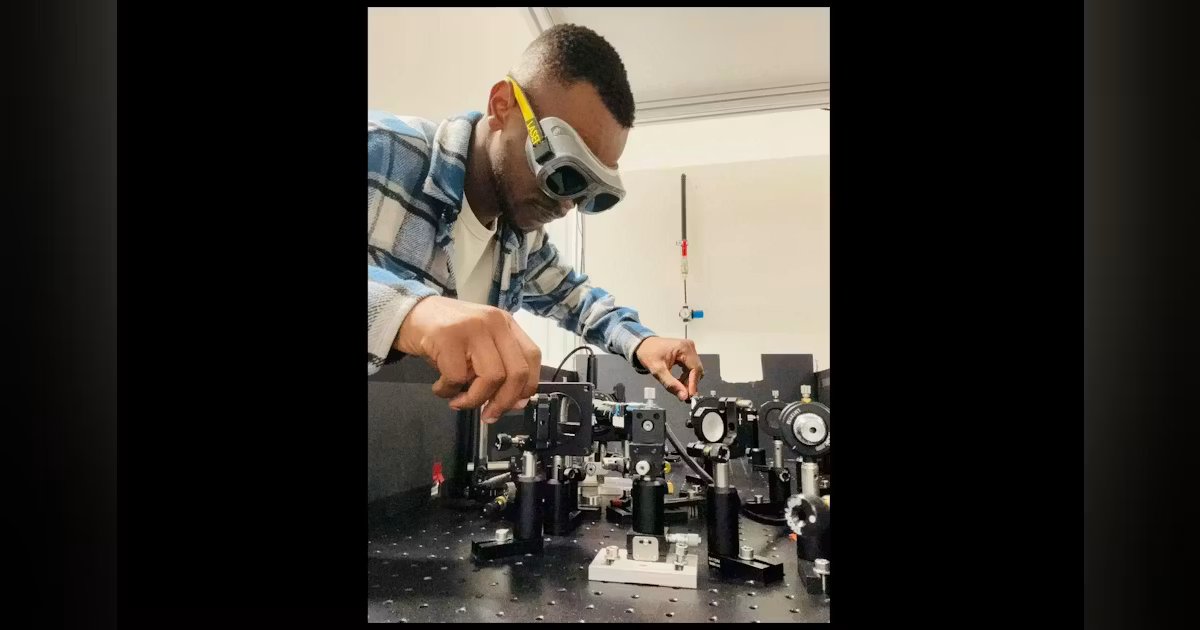
Program and control light’s chirality via a topology tweak?

Spin-orbit interactions of light Spin-orbit interactions of light “are usually associated with tight focusing, interfaces, anisotropic media, or nanostructures,” says Forbes. “In these cases, the spin and orbital degrees of freedom become coupled because the beam interacts strongly with a lens, a surface, or a material.” One surprising part for the team was seeing a

Program and control light’s chirality via a topology tweak? Read More »
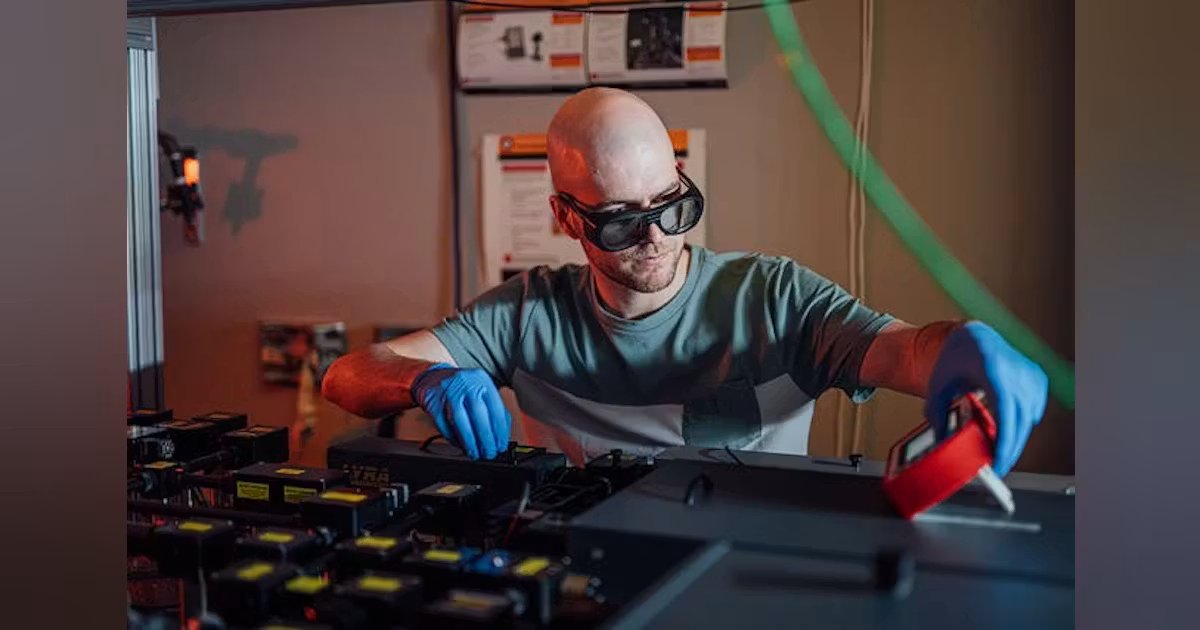
Organic thin film brings second-order optical nonlinear effects to silicon photonics

In an advance for photonic integrated circuits (PICs), Stéphane Kéna-Cohen and his team at Polytechnique Montréal in Canada recently fabricated waveguides for frequency doubling using an organic thin film—based on triphenylamine-dicyanoquinoxaline, a.k.a. TPA-QCN—that strongly interacts with light. This class of materials may help lessen AI’s energy load on data centers because it can be placed

Organic thin film brings second-order optical nonlinear effects to silicon photonics Read More »

Optical solutions address performance demands across computing landscape

LFW: What advantages does optical compute offer that currently available compute infrastructure doesn’t? Steinman: Optical compute is well suited to accelerate mathematical operations central to AI and scientific workloads, particularly linear operations such as vector-matrix multiplication. Our PACE 2 platform, for example, uses a 128 × 128 configurable optical matrix multiplier and a heterogeneous optoelectronic

Optical solutions address performance demands across computing landscape Read More »

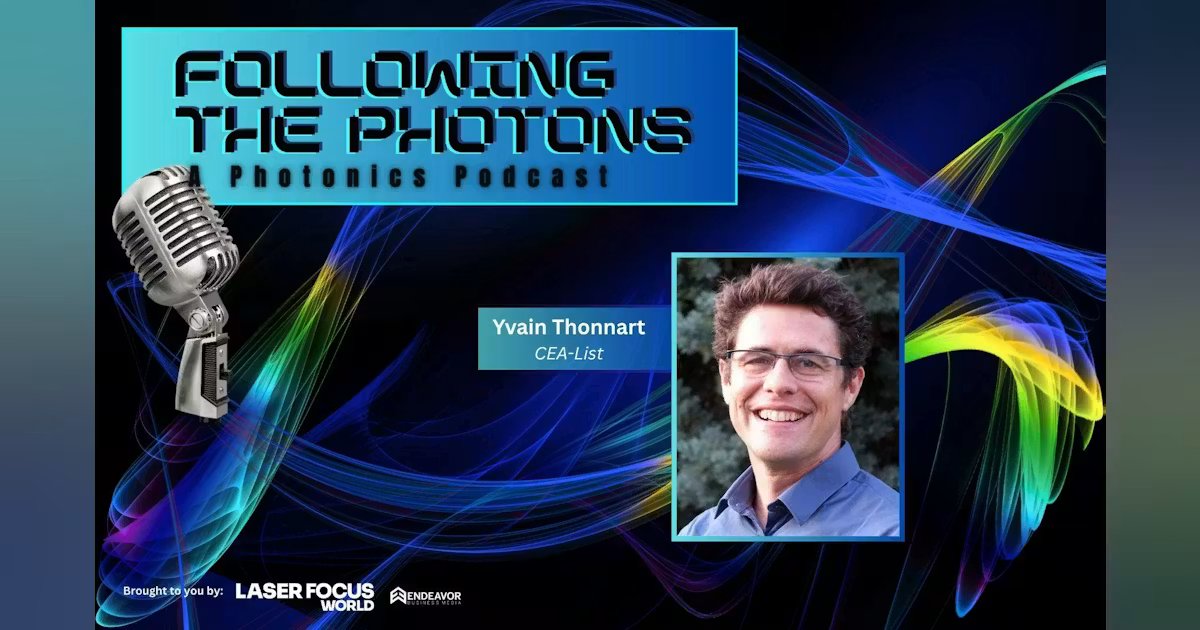
PODCAST: Meet Yvain Thonnart, CEA-List

This edition features Yvain Thonnart, a chief scientist in the digital integrated circuits and systems division of the French research institute CEA-List, where he focuses on areas including networks-on-chip and integrating emerging photonics technologies. He talked recently with host Justine Murphy about his work at CEA, and his team’s potentially gamechanging development of the first

PODCAST: Meet Yvain Thonnart, CEA-List Read More »

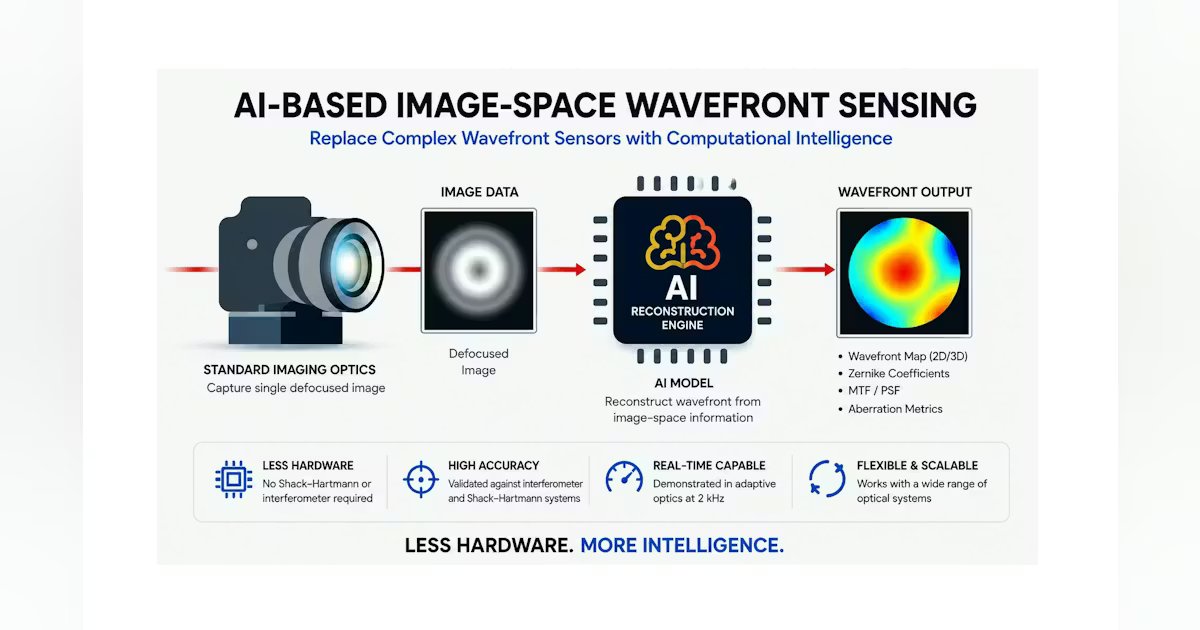
Computational wavefront sensing without a wavefront sensor

Our methodology has also been used operationally for several years by astronomers to support telescope alignment and optical performance evaluation under real observing conditions—which demonstrates the approach is effective not only within laboratory environments, but also for practical field applications under atmospheric seeing conditions (stability of the Earth’s atmosphere). Beyond accuracy, the computational architecture also

Computational wavefront sensing without a wavefront sensor Read More »

Researchers help demystify laser-driven plasma self-magnetization for fusion

One key part of the race to put clean laser-driven fusion energy on the grid by the 2030s or 2040s involves gaining a better understanding of the complex behavior of the plasma (a superhot ionized gas) generated. A new study led by researchers at the U.S. Department of Energy’s Princeton Plasma Physics Laboratory (PPPL) helps

Researchers help demystify laser-driven plasma self-magnetization for fusion Read More »

Optical computing to cut AI energy demand?

An optical computer prototype developed by Xingjie Ni, an associate professor of electrical engineering at Penn State School of Electrical Engineering and Computer Science, and his team opens up a more realistic path to reduce the energy demands of artificial intelligence (AI) computation. Their work was inspired by the growing mismatch between the computational demands

Optical computing to cut AI energy demand? Read More »

Shopping Cart
Scroll to Top