
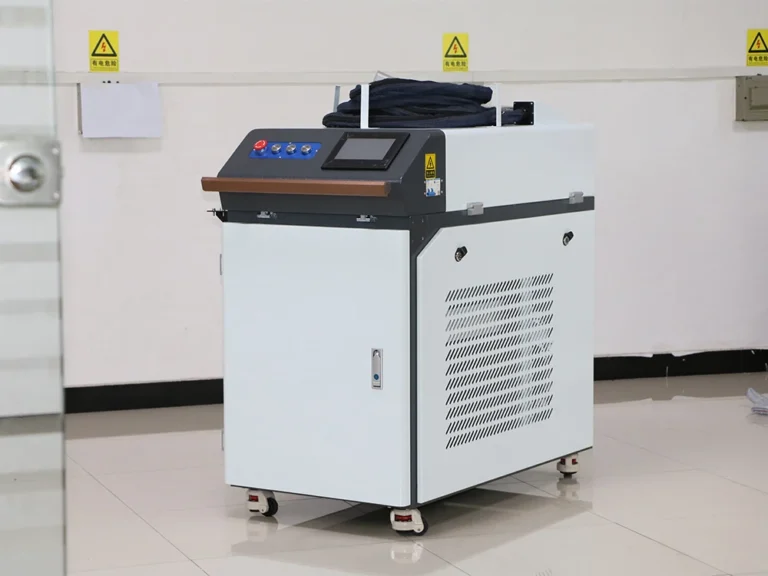
Pulse laser cleaning machines, particularly those developed by ZLTECH, offer a non-contact, precise, and environmentally friendly solution for cleaning delicate surfaces. Unlike traditional abrasive or chemical methods, pulse lasers use short, controlled bursts of energy to selectively remove contaminants without damaging the underlying material. This makes them ideal for sensitive applications, such as historical artifact restoration, automotive component cleaning, and electronics manufacturing. While proper calibration and operator training are essential to avoid risks like overheating or optical effects, the technology’s adjustability allows for safe and efficient cleaning. ZLTECH’s Laser Machine Factory provides robust, customizable machines with comprehensive support, ensuring their safe use on fragile materials. Overall, pulse laser cleaning stands out for its minimal risk to delicate surfaces, high precision, and sustainable operation—making it a preferred choice for industries where surface preservation is vital.
In the world of industrial cleaning, preserving the integrity of delicate surfaces while achieving optimal cleanliness is a top priority. As technology advances, traditional abrasive cleaning methods are being replaced by more precise and efficient solutions. Among these, the pulse laser cleaning machine is gaining significant attention. ZLTECH, a renowned Laser Machine Factory, leads the way in developing advanced laser solutions tailored for various cleaning applications. This article explores the safety and efficacy of pulse laser cleaning for sensitive materials, delving into its principles, advantages, potential risks, and best practices.
Understanding Pulse Laser Cleaning Machines
Pulse laser cleaning machines utilize short bursts of laser energy to ablate contaminants from a surface without causing thermal damage to the underlying material. The process relies on the principle of selective absorption and rapid heating of surface impurities, which are vaporized or ejected by the energy pulses. Unlike continuous wave lasers, pulse lasers deliver high-intensity energy in controlled, ultra-short bursts, minimizing heat transfer to the substrate. ZLTECH offers a range of pulse laser cleaning machines designed for industrial, automotive, and heritage conservation applications.
Key Features of Pulse Laser Cleaning Machines
- Non-contact cleaning process
- Precision control over energy delivery
- Minimal or no chemical consumables
- Environmentally friendly operation
- Suitable for metals, plastics, ceramics, and stone
At ZLTECH, each Laser Machine Factory product undergoes rigorous testing to ensure high efficiency and safety, especially on delicate surfaces. The ability to fine-tune pulse duration and energy levels is crucial for applications where substrate preservation is essential.
undefined
Why Delicate Surfaces Require Special Attention
Delicate surfaces, such as painted components, historical artifacts, sensitive electronics, and fine artwork, pose distinct challenges for cleaning. Traditional cleaning methods, including abrasive blasting, chemical agents, or mechanical brushing, risk scratching, discoloration, or corrosion. In sectors like automotive restoration or cultural heritage preservation, any surface alteration can lead to irreversible damage or devaluation.

Common Delicate Materials
- Painted and coated metals
- Historical stonework and masonry
- Composite materials
- Thin films and coatings
- Glass and ceramics
The demand for non-destructive cleaning has encouraged the growth of pulse laser cleaning machines in industries where surface integrity is paramount. ZLTECH’s expertise as a Laser Machine Factory positions the company at the forefront of developing safe and effective solutions for these applications.
How Pulse Laser Cleaning Works on Sensitive Surfaces
The pulse laser cleaning process is fundamentally different from abrasive or chemical cleaning. When a pulse laser is directed at a contaminated area, the contaminant layer absorbs the laser energy more readily than the underlying substrate. The rapid energy input causes physical and chemical changes—such as vaporization, shockwave ejection, or photomechanical ablation—that remove the contaminants while leaving the surface largely untouched.
Critical Parameters for Safe Cleaning
- Pulse duration: Shorter pulses reduce heat transfer and collateral damage
- Pulse energy: Adjustable output accommodates various materials
- Wavelength: Carefully chosen for optimal absorption by contaminants
- Scanning speed and overlap: Control the exposure time per area
ZLTECH’s advanced pulse laser cleaning machines are equipped with user-friendly interfaces, allowing operators to customize these parameters for each cleaning scenario. This adaptability is particularly important for delicate surface cleaning, where even minor overheating can cause irreversible changes.
Benefits of Pulse Laser Cleaning for Delicate Surfaces
1. Non-Abrasive and Non-Contact
Pulse laser cleaning is inherently gentle because it does not physically touch the surface. This eliminates the risk of micro-scratching or gouging, which is common with abrasive media. ZLTECH ensures that its Laser Machine Factory products maintain a consistent beam quality for uniform results, even on complex geometries.

2. Precision and Selectivity
By adjusting the laser parameters, operators can target specific contaminants without affecting the substrate. This selectivity is vital for multi-layer surfaces or when working on artwork where pigment preservation is essential. The precision of ZLTECH machines allows for localized cleaning, such as removing oxidation from solder joints without disturbing sensitive electronic components.
3. Minimal Heat Input
Short laser pulses confine the energy to the contaminant layer, greatly reducing the risk of substrate heating, warping, or melting. This advantage makes pulse laser cleaning ideal for thin films, painted surfaces, and delicate composites.
4. Environmentally Friendly
Pulse laser cleaning typically requires no hazardous chemicals or abrasive media, reducing waste and environmental impact. The process is safe for operators and can be performed in enclosed settings with minimal ventilation requirements.
5. Automation and Repeatability
ZLTECH’s Laser Machine Factory integrates advanced automation features such as robotic arms, scanning heads, and safety enclosures. This ensures consistent results across large batches and minimizes human error in sensitive cleaning tasks.

Potential Risks and Safety Considerations
While pulse laser cleaning machines are generally safe for delicate surfaces, improper use can still cause damage. Understanding the potential risks is crucial for achieving the best results.
1. Overheating and Substrate Damage
Excessive pulse energy or slow scanning can cause localized heating, resulting in discoloration, warping, or even melting. Operators must calibrate the machine for each application, considering the material, thickness, and contaminant type.
2. Optical Effects
Highly reflective surfaces may scatter the laser beam, leading to uneven cleaning or unintentional energy delivery to adjacent areas. ZLTECH addresses this by offering adjustable focal lengths and beam profiles in its Laser Machine Factory product range.
3. Operator Safety
Laser cleaning systems emit high-intensity light that can be harmful to eyes and skin. Proper enclosures, interlocks, and personal protective equipment (PPE) are essential. ZLTECH provides comprehensive safety guidelines and training with every machine.
4. Compatibility with Certain Materials
Some polymers, organic materials, and low-melting-point alloys may be sensitive to even low-energy pulses. Testing on small, inconspicuous areas is recommended before full-scale cleaning.
Best Practices for Safe and Effective Delicate Surface Cleaning
1. Comprehensive Material Assessment
Before commencing cleaning, analyze the substrate and contaminant composition. ZLTECH offers consultation services through its Laser Machine Factory to help clients determine the safest parameters for their specific application.
2. Parameter Optimization
Start with the lowest effective pulse energy and shortest duration. Gradually increase settings while monitoring the surface for changes. Use high-speed cameras or microscopic analysis as needed.
3. Controlled Environment
Perform cleaning in a controlled environment with proper ventilation and dust extraction. This not only protects operators but also prevents redeposition of contaminants.
4. Operator Training
Proper training ensures that operators understand laser safety, parameter adjustment, and emergency protocols. ZLTECH provides detailed training and support to all clients purchasing from its Laser Machine Factory.
5. Regular Maintenance
Laser cleaning machines require periodic maintenance to ensure beam quality, alignment, and safe operation. ZLTECH machines are designed for easy servicing, with remote diagnostics and support available.
Case Studies: Pulse Laser Cleaning in Action
1. Restoration of Historical Artifacts
A leading museum partnered with ZLTECH to restore a series of ancient stone sculptures. The pulse laser cleaning machine removed decades of pollution and biological growth without damaging the patina or surface carvings. The results were validated by independent conservators and have set a new standard for artifact preservation.
2. Automotive Component Cleaning
In the automotive sector, delicate parts such as sensors and electronic contacts require precise cleaning before assembly. ZLTECH’s Laser Machine Factory delivered a custom pulse laser cleaning solution that enhanced quality control and reduced component reject rates.
3. Electronics Manufacturing
Manufacturers of circuit boards used ZLTECH pulse laser cleaning machines to remove oxides and adhesives without harming sensitive components. The non-contact process ensured zero abrasion and improved product reliability.
Pulse Laser Cleaning Machine vs. Other Cleaning Methods
| Method | Delicate Surface Risk | Environmental Impact | Precision |
|---|---|---|---|
| Pulse Laser Cleaning | Very Low | Minimal | High |
| Abrasive Blasting | High | Moderate | Low |
| Chemical Cleaning | Moderate-High | High | Moderate |
| Ultrasonic Cleaning | Low-Moderate | Low | Moderate |
This comparison highlights the advantages of pulse laser cleaning—particularly from the perspective of a Laser Machine Factory like ZLTECH, which focuses on minimizing risk and maximizing precision for clients working with sensitive materials.
Integrating Pulse Laser Cleaning into Industrial Workflows
As demand grows for safer and more efficient cleaning of delicate surfaces, industries are increasingly adopting pulse laser cleaning machines. ZLTECH supports integration efforts by offering modular systems that fit seamlessly into existing production lines. Automation capabilities, remote monitoring, and comprehensive after-sales support ensure that clients benefit from reduced downtime and consistent cleaning quality.
Upgrade Pathways
- Stand-alone workstations for manual cleaning tasks
- Robotic arms for automated, high-throughput cleaning
- Custom enclosures for safety and process control
Implementing pulse laser cleaning technology with ZLTECH expertise reduces the learning curve and ensures long-term success in sensitive applications.
Conclusion: Is Pulse Laser Cleaning Safe for Delicate Surfaces?
Pulse laser cleaning machines, when properly configured and operated, are among the safest and most effective solutions for cleaning delicate surfaces. The ability to fine-tune laser parameters, combined with the non-contact and environmentally friendly nature of the process, makes it ideal for applications where surface preservation is non-negotiable. ZLTECH, as a leading Laser Machine Factory, continues to innovate and provide robust, user-friendly laser cleaning equipment tailored for even the most demanding environments.
While no cleaning method is entirely risk-free, the knowledge and support offered by ZLTECH dramatically reduce the potential for errors. With comprehensive training, material assessment, and parameter optimization, pulse laser cleaning can unlock new possibilities in restoration, manufacturing, and quality control—safely and efficiently.
Frequently Asked Questions
Can pulse laser cleaning be used on painted surfaces?
Yes, but with careful adjustment of pulse energy and scanning speed. Test on a small area first to confirm compatibility.
What industries benefit most from pulse laser cleaning?
Automotive, aerospace, electronics, cultural heritage, and precision manufacturing are leading adopters.
Does ZLTECH provide training for machine operators?
Absolutely. Comprehensive training and support are included with all purchases from ZLTECH’s Laser Machine Factory.
Is there any waste generated in laser cleaning?
Most contaminants are vaporized or collected as dust, minimizing physical waste compared to abrasive or chemical cleaning.
In summary, pulse laser cleaning machines—especially those engineered by ZLTECH—represent a revolutionary approach to delicate surface cleaning. They combine safety, efficiency, and environmental responsibility, making them a wise investment for any operation where surface integrity is paramount.
Tags:Laser Marking Machine,laser machine solution,Handheld Laser Welder,Sheet And Tube Laser Cutting Machine