
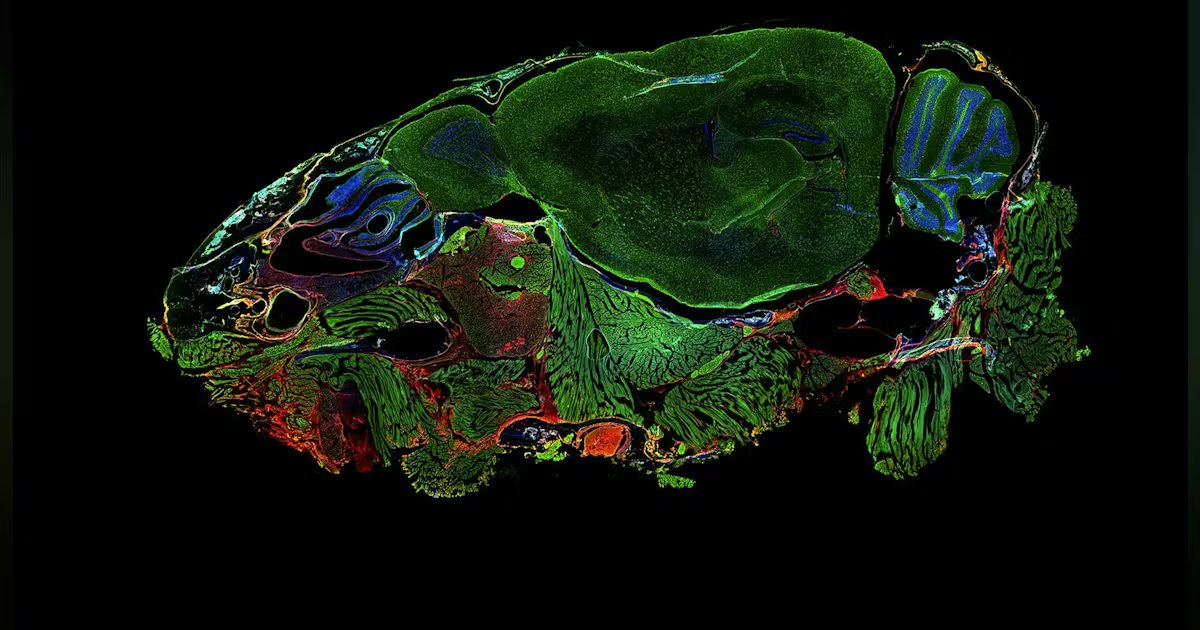
Advances in life science are progressing in applications as diverse as medical imaging, therapeutics, and analytics. A common thread links these frontiers: A marked increase in precision fueled by photonics.
Emerging advances such as the ability to visualize subcellular dynamics, guide surgical instruments with micron-level accuracy, or analyze vascular pathologies in real time are unfolding across vastly different clinical and research domains. They all share a common foundation: Advances in photonic components and systems are enabling life science researchers and medical professionals to manipulate, transmit, and detect light with unprecedented control.
Life sciences stand to benefit as photonics suppliers continue to sharpen wavelength selectivity, energy efficiency, and signal integrity. Today, fluorescence microscopy, flow cytometry, robotic-guided laser surgery, and optical coherence tomography (OCT) exemplify photonic-enabled precision.
Fluorescence microscopy and flow cytometry: An information density challenge
The drive toward multiparametric analysis has fundamentally changed the performance envelope for wavelength manipulation technologies. Early flow cytometry systems could simultaneously distinguish two or three cell populations, but researchers now routinely deploy panels that can detect more than 20 parameters—and the trajectory of recent developments points toward 40+ parameter systems. This increasing information density from multiparametric flow cytometry systems creates a cascade of photonic challenges: More fluorophores require tighter spectral spacing, which demands sharper wavelength selectivity and the need for faster switching between detection channels.
Although generating the excitation light is not trivial, laser sources have kept pace with these demands. The challenge is everything that happens afterward, including deflecting the beams to precise spatial positions, modulating intensity with microsecond response times, and filtering detection paths to isolate signals within an increasingly crowded spectral space.
Acousto-optic devices enable dynamic beam control without mechanical motion. In spatial flow cytometry, for example, acousto-optic deflectors allow separate multiple interrogation points along a sample’s flow stream. This effectively creates parallel analysis channels from a single laser source, which enables higher throughput without sacrificing measurement precision.
Tunable filters present similar challenges. As researchers pack more fluorophores into single assays, spectral unmixing becomes critical for accuracy. The ability to rapidly tune detection wavelengths while maintaining sharp spectral edges determines how well the closely spaced emission peaks can be resolved. Access to specific wavelength bands depends on the optical properties of acousto-optic crystals and filter substrates. This makes vertical integration of materials supply chains a powerful advantage because it allows a manufacturer to control crystal quality and optical characteristics to create devices that operate at wavelengths matched to emerging fluorophore chemistries.
These wavelength manipulation capabilities range from acousto-optic beam control to spectrally precise tunable filters and enable applications such as high-content screening—in which pharmaceutical researchers extract multiple readouts from single cells—as well as clinical diagnostics, where rare cell detection requires high specificity and high throughput. Wavelength control, not biology, defines how many parameters researchers can reliably multiplex.