
Focus on reliability and cost
While reliability remains a central challenge for IFE-class laser diodes, in the short term it’s not a roadblock to IFE deployment progress. Systems such as high-repetition rate advanced petawatt systems (HAPLS), after 10 years of operation, demonstrate meaningful laser system utilization, because current use conditions rarely demand ON-times at full pulse repetition rate or 24/7 operation. In the long term, however, requirements are becoming more demanding.
At Photonics West 2026, Lawrence Livermore National Laboratory presented reliability targets on the order of 5 Gigashots—a level that requires improvements in efficiency, heat extraction, and facet protection. The Starfire collaborative, with participants from Germany, France, the U.S., and Japan, aims to establish a global reliability testing standard to accelerate qualification cycles and unify expectations across the IFE supply chain.
Cost remains the largest barrier to economical diode use for fusion, and solving it is fundamentally a manufacturing challenge. Reaching a price point below $10/kW won’t happen through volume alone—it requires a purpose‑built manufacturing ecosystem that combines deliberate engineering, high automation, robust supply chains, and sustained investment. The III–V edge‑emitting laser industry today resembles the silicon industry decades ago: High manual labor content, limited automation, non-standardized processes, high variability, and extensive in‑process testing.
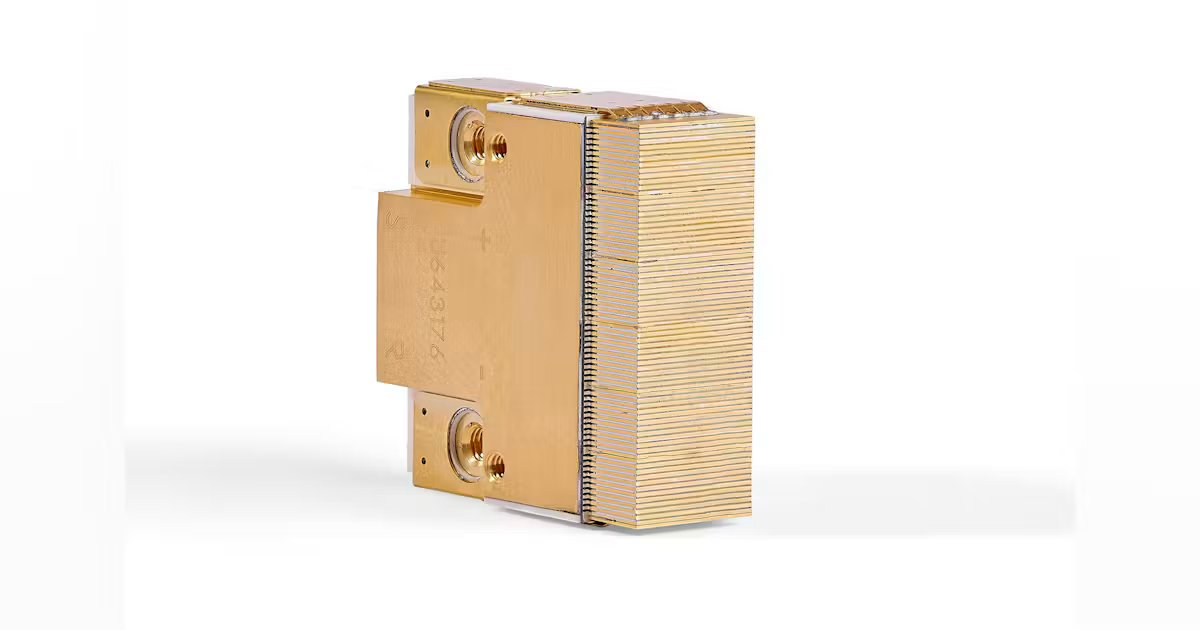
Arizona’s emerging semiconductor hub offers an opportunity to establish a new manufacturing model informed by lessons from the silicon industry. With T6 architecture as a building block, state‑of‑the‑art peak power, and micro‑optics that enable module miniaturization without brightness loss, Leonardo is well positioned to translate these manufacturing advances into low‑cost, high‑performance diode modules produced in Arizona.
Building a resilient manufacturing environment where the design, manufacture, and test of high‑performance diodes can thrive requires a capable workforce supply, and Arizona is developing this infrastructure. Supported by the Arizona Board of Regents, the University of Arizona has declared IFE a major thrust and, in collaboration with private companies such as Leonardo, serves as an education and research institution. Local partners like Pima Community College, the Southern Arizona Center for Optics and Photonics, and Optics Valley are investing in technician and operator training to create a workforce pipeline tailored to advanced diode production. Together, these institutions position Tucson and Southern Arizona as the place where low‑cost, fusion‑grade laser diodes can be manufactured at scale and anchor a global IFE supply chain.
As inertial fusion energy moves from scientific breakthrough to commercial reality, scalable and cost-effective laser hardware is the key to moving from laboratory demonstrations to viable power plants. Our high-power diode architectures, including high‑brightness T6 modules, advanced micro‑optics, double‑junction bars, and manufacturable processes, provide the foundation for fusion plant designs. With regional support from the University of Arizona and the broader semiconductor ecosystem within Arizona, we can create a place where cutting-edge diode technology, skilled workforce development, and a robust manufacturing base converge. This combination positions Southern Arizona not just as participants, but as essential enablers of delivering the compact, efficient, reliable, low-cost megawatt-class modules at scale that are critical to making fusion a practical source of clean energy for the world.
ACKNOWLEDGEMENT
The author thanks Leonardo’s Laurel Lunsford, Patrick Keiffer, and Prabhu Thiagarajan for their valuable contributions and assistance in completing this article.